Basement wine cellar: the most natural place to store wine
The basement has always been a natural ally for wine. Its cool, stable temperature, high humidity, and darkness make it an ideal place to age a collection. But not all basements are naturally suitable: an air-conditioning system and thoughtful design are often necessary to create a true wine cellar.
The Basement: A Natural Place to Store Wine
Historically, the finest wines have aged in underground cellars. A modern cellar—even one that is heated or partially underground—can replicate these conditions provided it meets five criteria:
- A stable temperature of around 12 °C.
- A relative humidity between 50 and 80%.
- Continuous ventilation.
- A lack of vibrations.
- Darkness or neutral lighting, without UV.
That is exactly what EuroCave solutions make possible, even when the basement isn't ideal to begin with.
Check Whether Your Basement Meets Code Requirements
Before starting any project, you need to assess the room. Four key points.
- Temperature: Measure temperature fluctuations throughout the year. If they exceed 5 °C, air conditioning is essential.
- Humidity: A concrete floor that is too dry or a room that is too humid can disrupt proper storage conditions. EuroCave air conditioners automatically regulate humidity levels.
- Insulation: Walls, ceilings, and doors must be insulated to minimize heat transfer with heated rooms.
- Lighting: Neon lights, white lights, and UV lights should be avoided. Opt for dimmable LED lighting.
Three Ways to Renovate a Basement
1. A wine cellar for aging wine
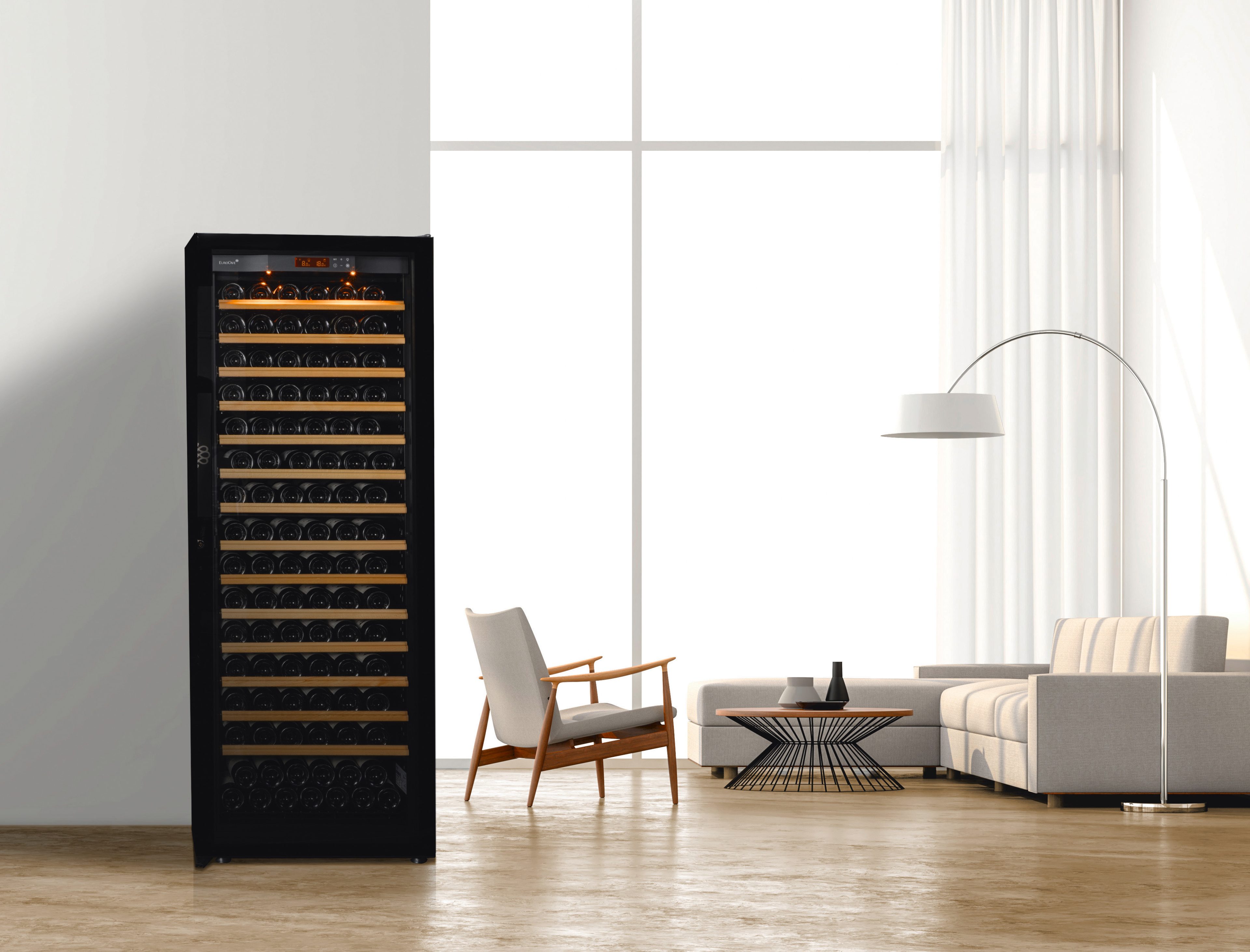
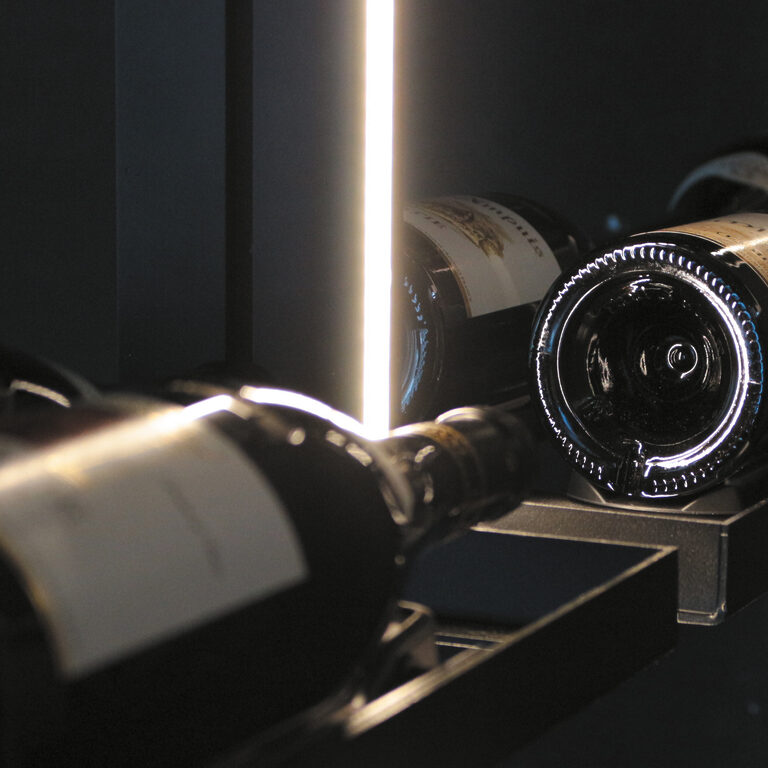
If you don’t want to renovate the room, a large-capacity EuroCave wine cooler from the Royale line—holding up to 124 bottles—installed in the basement creates a perfectly controlled storage area without any construction work. It’s the quickest and most hassle-free solution for anyone who owns a few hundred bottles.
2. A EuroCave Inoa wine cellar air conditioner
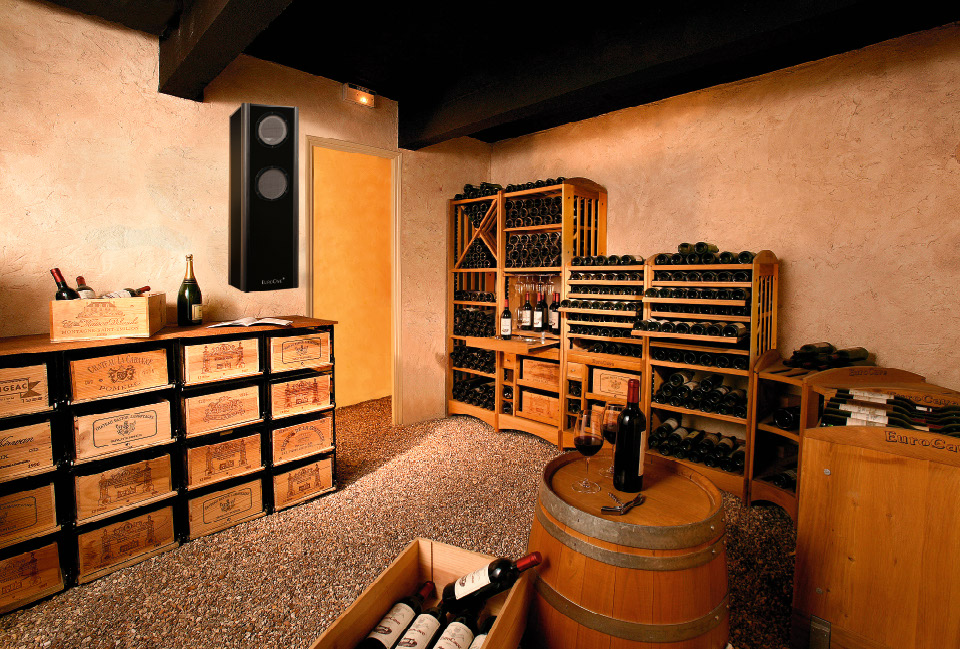
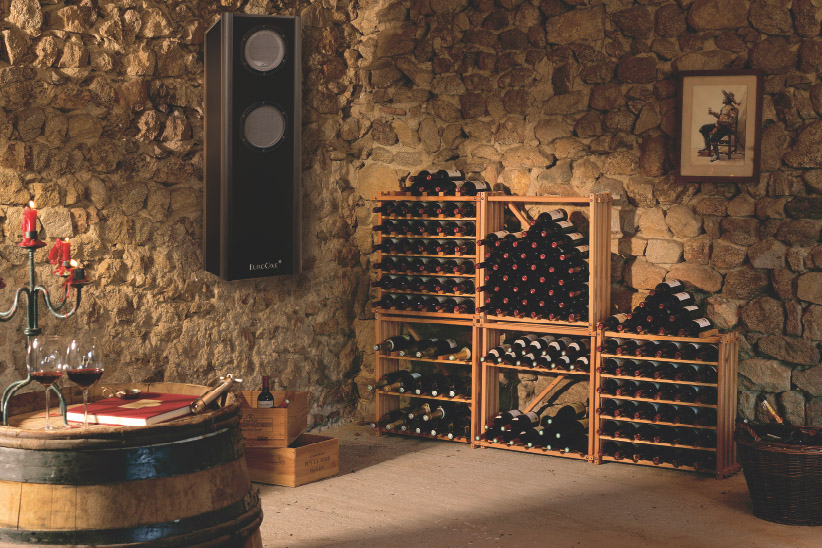
To transform an existing room into a natural wine cellar, the Inoa air conditioner can be installed on a wall, on the floor, or in a drop ceiling, and automatically maintains the temperature and humidity. Three power ratings are available to accommodate volumes ranging from 12 to 50 m³. Discreet and quiet, it represents the most cost-effective investment for an already insulated basement.
3. A Complete, Custom-Designed Layout
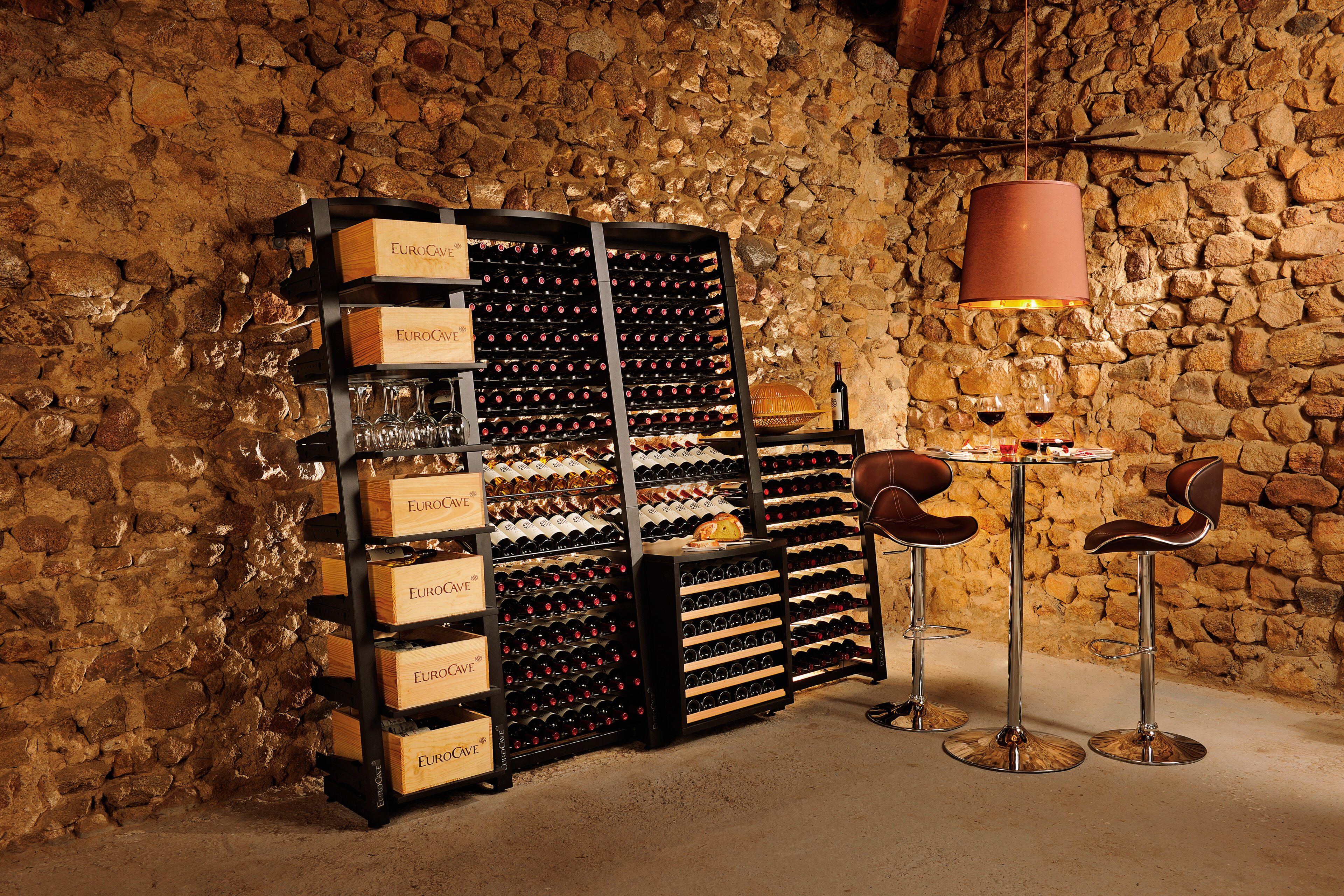
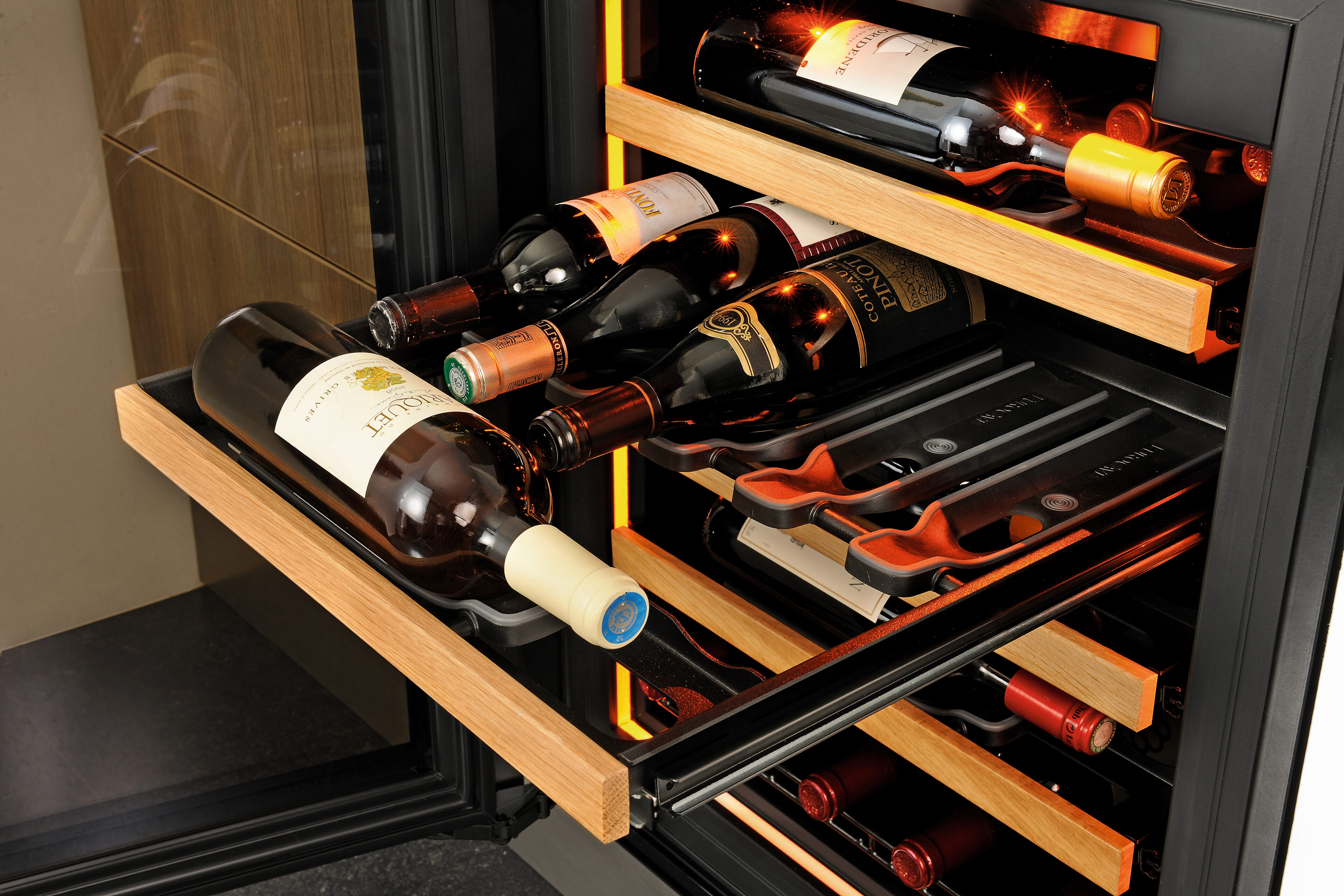
Our team designs a truly exceptional wine cellar: UV-protective glass door, insulation, climate control, solid “Pierre Chêne” oak shelving, wooden crate racks, a tasting area, and a counter. Ideal for large collections and wine enthusiasts who want to enjoy their wine cellar to the fullest.
Custom Design: Transform Your Basement into an Exceptional Wine Cellar
When a basement is dedicated to wine, a custom design allows you to control every aspect: capacity (from 300 to over 5,000 bottles), accessibility (sliding racks, compartments, spaces for wooden crates), ambiance (lighting, finishes, flooring, vaulted ceilings), and the overall experience (tasting area, table, counter).
EuroCave designs, manufactures, and installs your turnkey wine cellar, tailoring it to the layout of your home in French-speaking Switzerland.
Frequently Asked Questions
Is my basement suitable for installing a wine cellar?
To find out, start by measuring the annual temperature (ideally 10 to 14 °C, with a temperature range of less than 5 °C) and the relative humidity (50 to 80%). Also check that there are no vibrations, odors, or direct light. If any of these criteria are not met, an Inoa wine cellar air conditioner and/or additional insulation can help restore optimal conditions.
Should you insulate your basement before installing a wine cellar?
Every room must be thermally insulated. This is essential for maintaining a stable indoor climate, ensuring the air conditioner’s longevity, and reducing energy consumption.
Which Inoa air conditioner should you choose based on the size of your basement?
The Inoa EuroCave air conditioner is available in two power ratings to cover volumes ranging from 12 to 50 m³. For spaces smaller than 12 m³, the Tahoma air conditioner is the ideal solution.
The choice depends on the volume, the level of insulation, the outdoor temperature, and the desired humidity levels. A quick assessment by our advisors allows us to precisely size the system.
How many bottles can be stored in a basement wine cellar?
For custom-designed wine cellars, storage capacity ranges from 300 to over 5,000 bottles, depending on the available space and the type of storage units (individual shelves, wooden crates, metal racks, and racks for horizontal storage). We tailor the storage solutions to your collection’s specific needs (Bordeaux-style bottles, Burgundy bottles, magnums, etc.).
How long does it take to install a custom wine cellar in the basement?
For a complete custom project (insulation, climate control, storage solutions, and finishing touches), allow 8 to 16 weeks from design to commissioning, including 2 to 4 weeks of on-site installation. Very large cellars or ambitious architectural projects may require more time.
Need personalized advice?
Our consultants are here to help you with all your projects:
—whether you’re choosing a wine cellar, planning the layout, integrating it into your space, or looking for a custom solution.