Built-in wine cooler for the kitchen
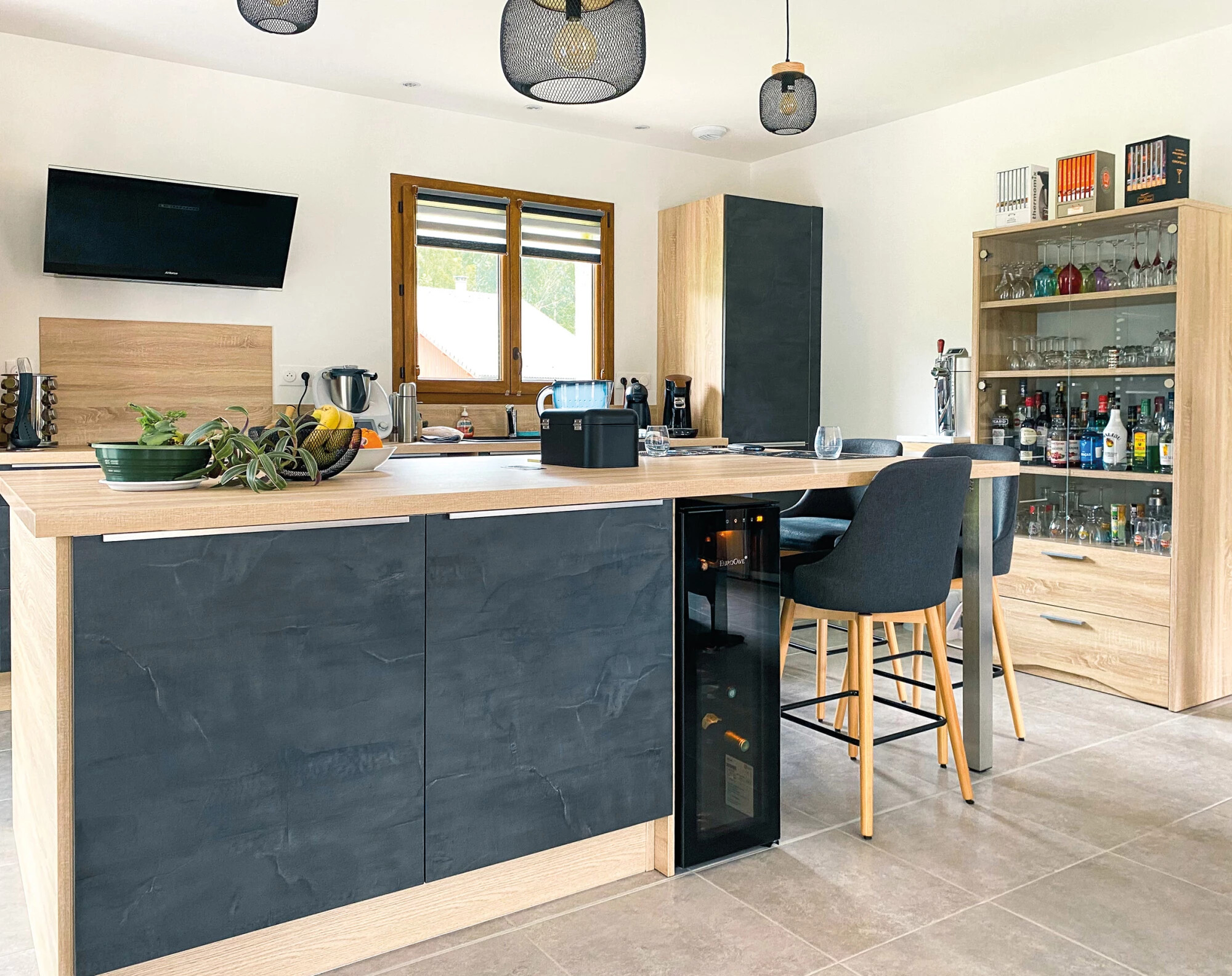
The kitchen has become the beating heart of the home. As a living space where we cook, share meals, and entertain, it’s a natural place to display your wine bottles within easy reach. Building a wine cooler into a kitchen cabinet allows you to combine functionality, decor, and technical expertise—provided you follow a few essential rules.
Why install a wine cooler in the kitchen?
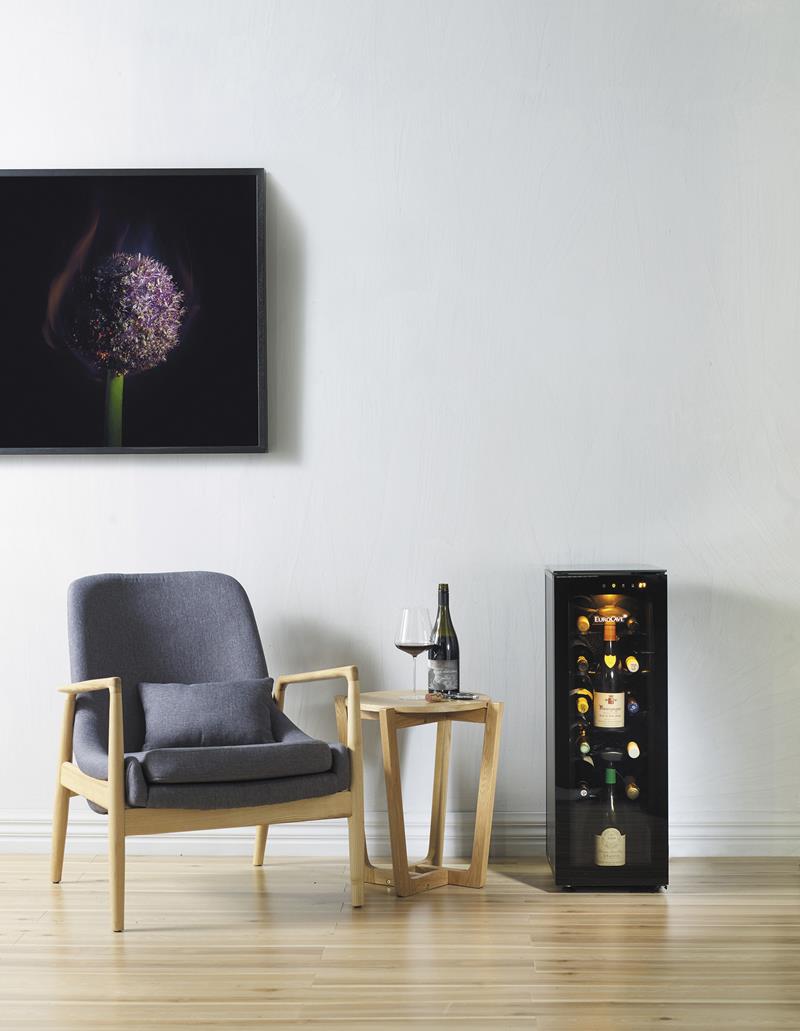
A kitchen wine cooler is, first and foremost, a serving cooler. Its purpose: to keep your bottles at the ideal serving temperature so they’re ready to drink as soon as you open them. A white at 8 °C, a rosé at 10 °C, or a red at 18 °C—all instantly accessible, without having to go down to the cellar.
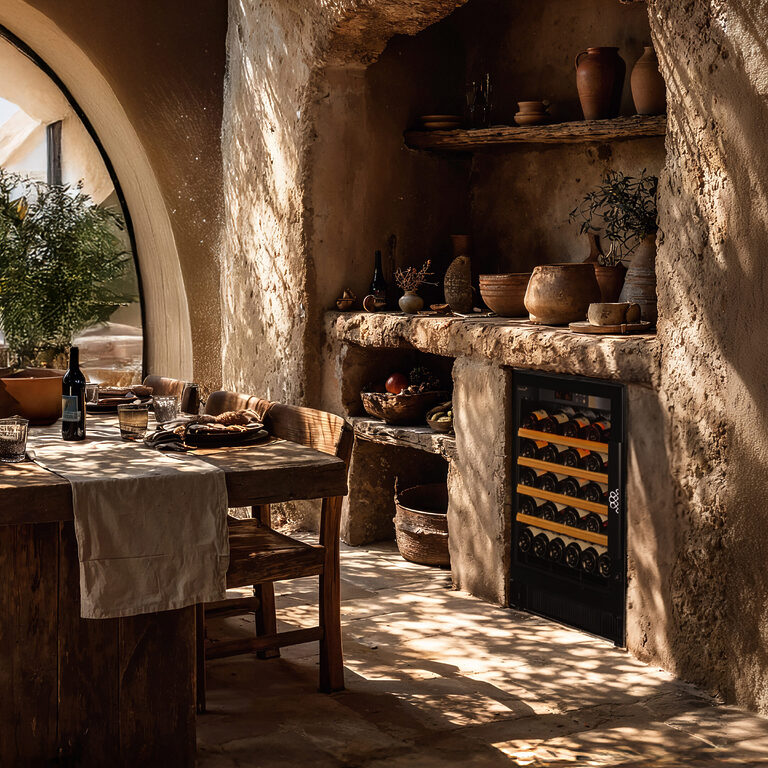
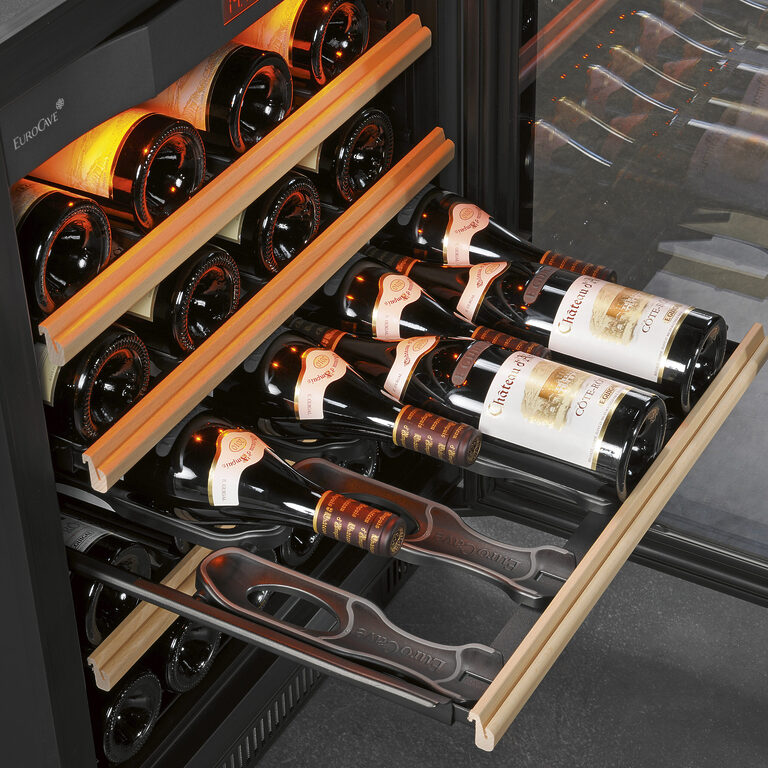
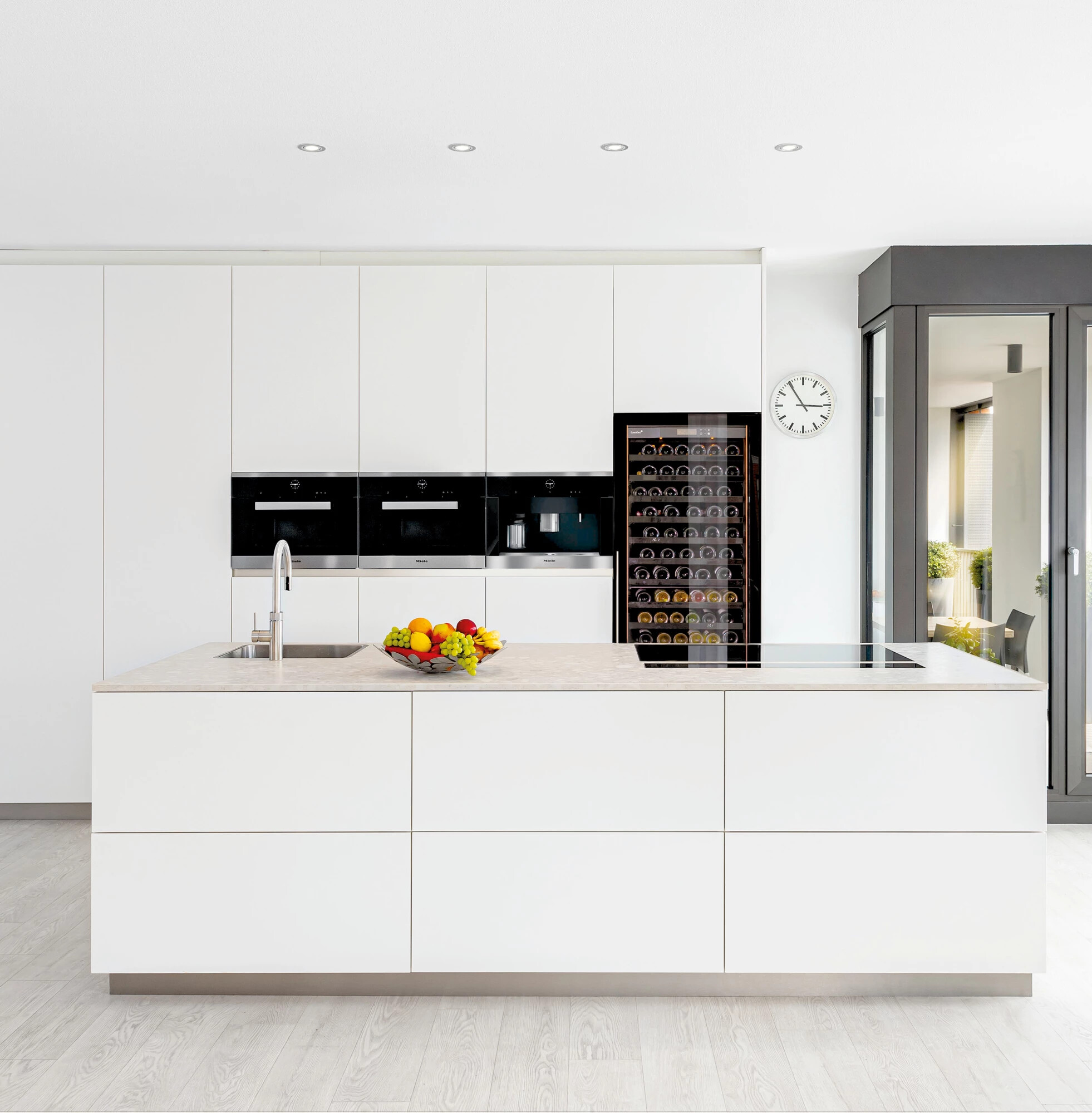
Built into a dedicated niche, it blends seamlessly with the cabinetry like a high-end appliance and frees up counter space. It’s also a decorative statement: a UV-resistant glass door by EuroCave, soft LED lighting, Pierre Chêne wood shelves… all details that showcase the collection without disrupting the room’s harmony.
Building a Built-In Wine Cellar: Three Technical Criteria to Consider
1. Front Ventilation
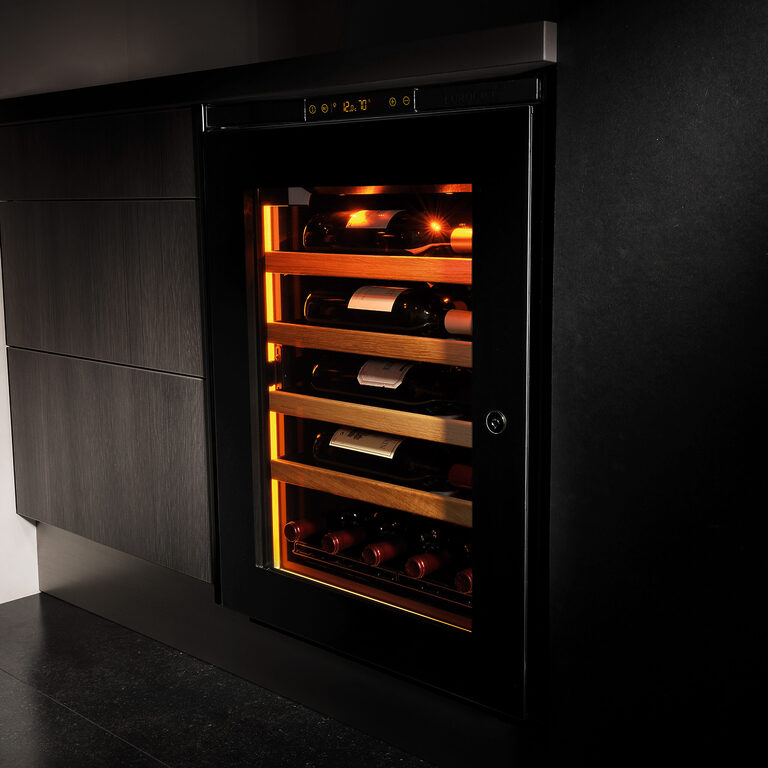
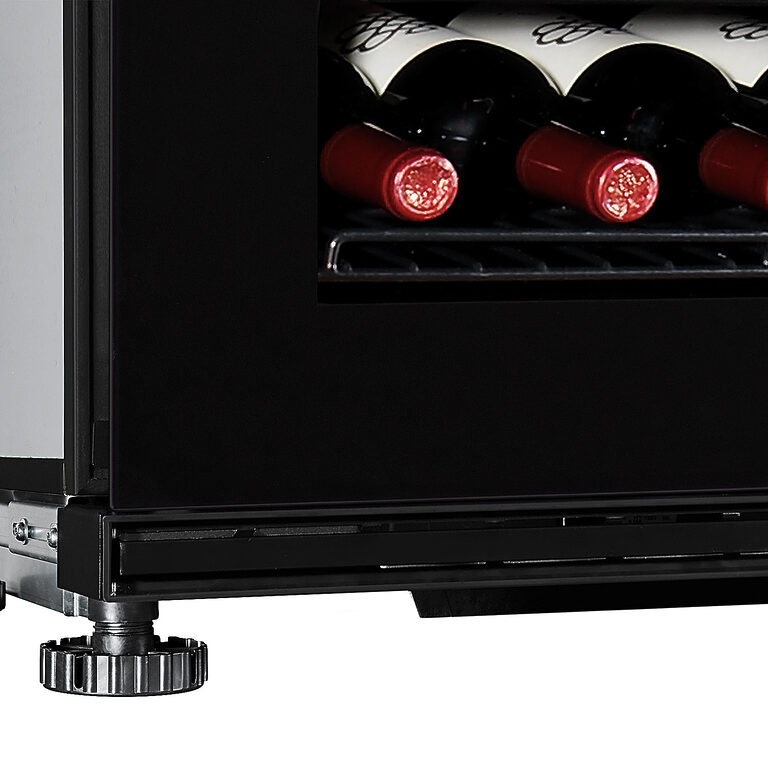
A built-in wine cooler vents heat from the front, unlike a freestanding wine cooler, which vents from the back and sides. Without this system, the unit could overheat in an enclosed niche, compromising food preservation. All EuroCave built-in wine coolers are designed for this type of installation, with a discreet ventilation grille at the base of the front panel.
2. The dimensions of the niche
EuroCave built-in wine coolers are available in standard sizes to fit European kitchen cabinets:
- Under-counter unit: 82 or 88 cm high, 59.2 cm wide, ideal for fitting between two kitchen cabinets.
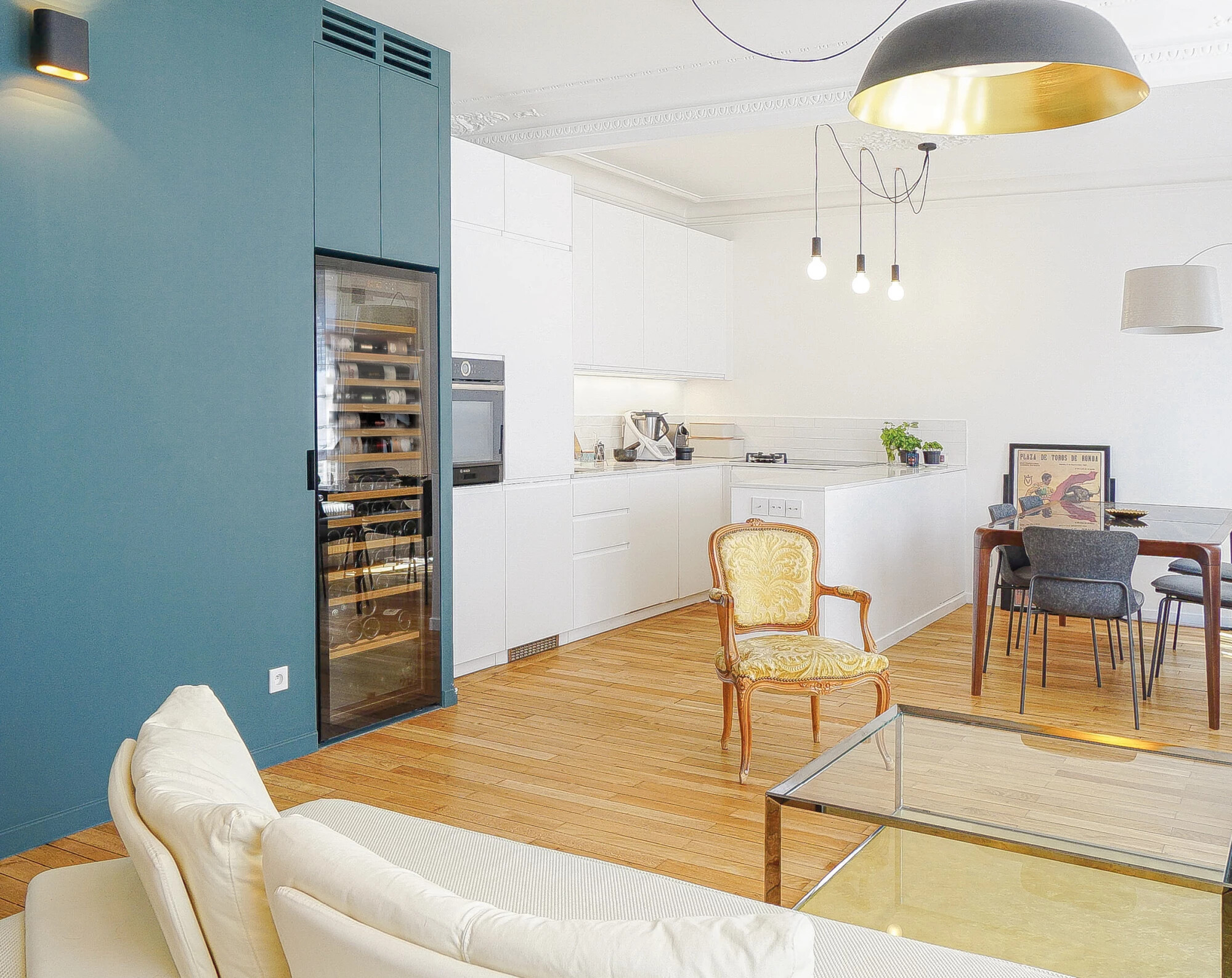
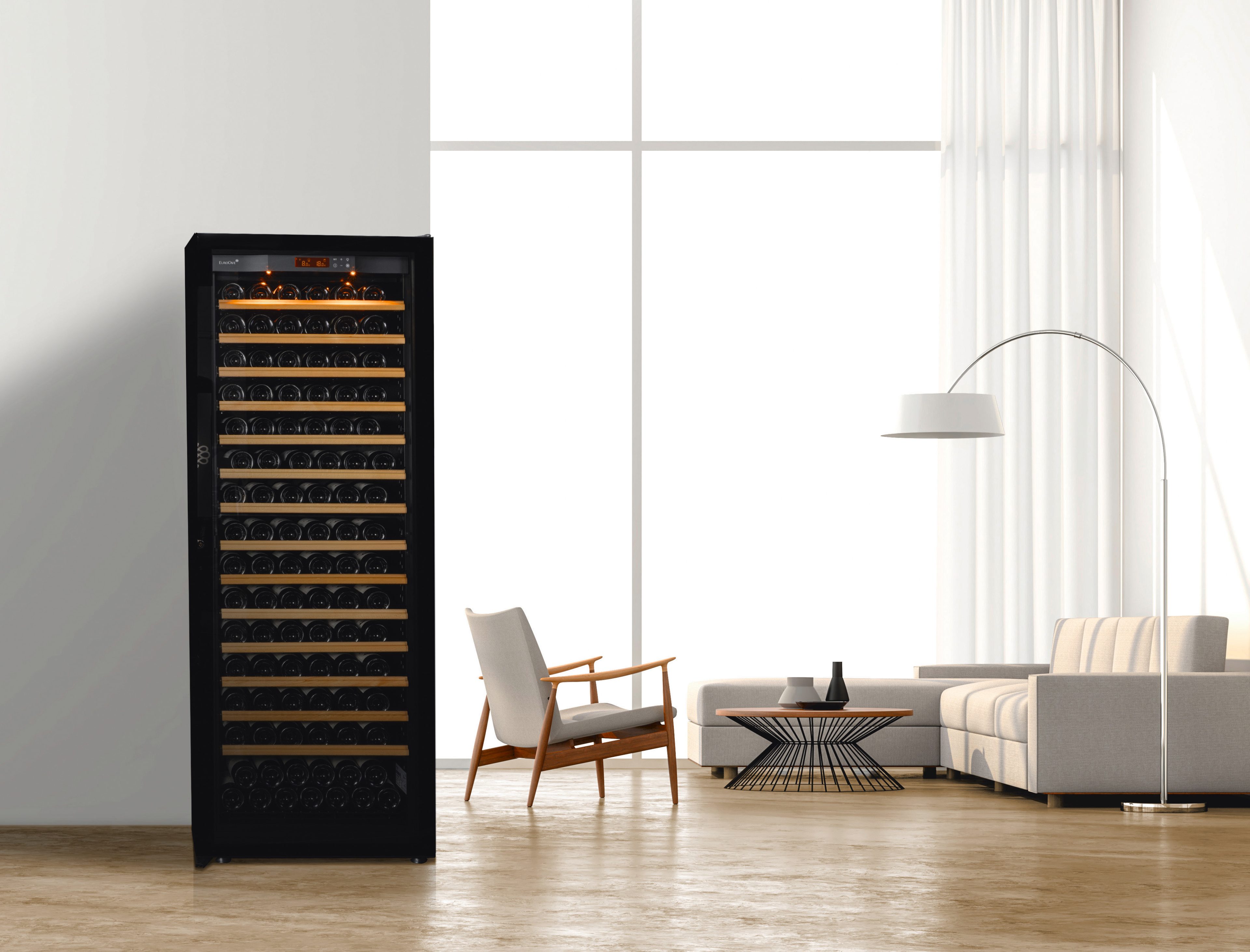
- Tall wine rack: 122, 145, or 178 cm tall, designed to hold 80 to 170 bottles and fit between an oven and a refrigerator.
Be sure to leave a few millimeters of clearance for installation, and take into account which way the door opens (left or right).
3. Finishes
The solid door protects the wine from light and provides excellent thermal insulation. The UV-protective glass door, which is more visually appealing, showcases the bottles, and optional LED lighting enhances this effect. Choose from a black trim, brushed stainless steel, or a customizable finish that matches the front of your cabinets: your wine cooler should complement the rest of your kitchen.
Which wine cooler should I choose for my kitchen?
For the kitchen, we highly recommend a multi-temperature wine cooler. It features several temperature zones, allowing you to serve white, rosé, and red wines simultaneously at their ideal temperatures.
If you want to both store your bottles for the long term and keep a few bottles ready to drink, only a three-zone wine cooler combines aging and temperature control in a single unit. This configuration is available exclusively in the Pure line.
Custom Kitchen Designs with Built-in Wine Cellars
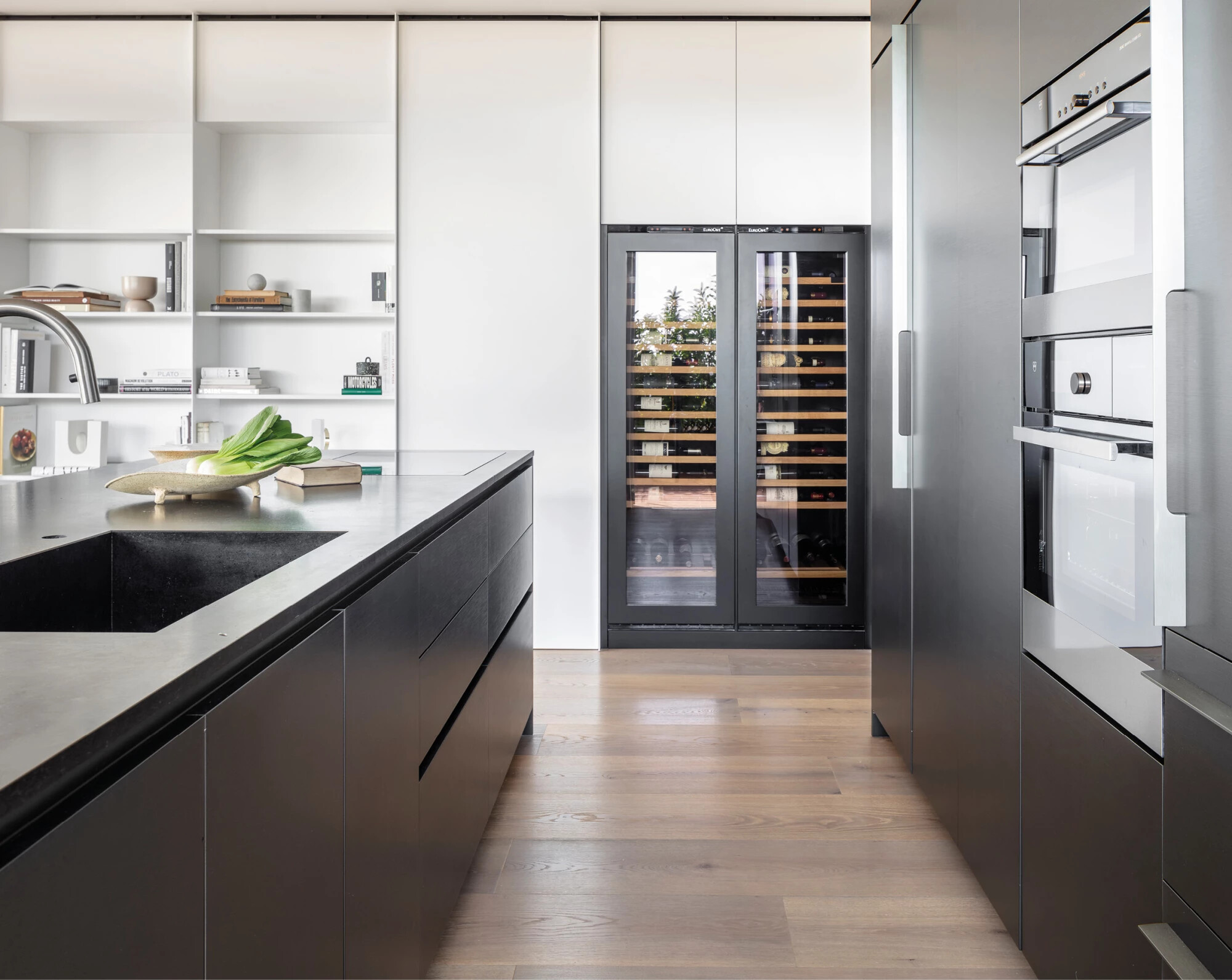
Our Swiss clients entrust us with a wide variety of projects, ranging from apartment renovations in Geneva to new villas on the Vaud Riviera. Discover some inspiration from our recent projects.
Take It a Step Further: Custom Kitchen Design
Are you renovating your kitchen and want to incorporate a wine cellar into an unconventional niche? Are you envisioning a space dedicated entirely to wine between the kitchen and dining room, or a glass display case that extends from the countertop?
Our custom wine cellar design service creates turnkey solutions: structure, insulation, climate control, wood or metal shelving, and exceptional glasswork. A team of designers will guide you every step of the way, from the 3D sketch to the final installation.
Frequently Asked Questions
What dimensions should I plan for when building a wine cooler into a kitchen cabinet?
EuroCave built-in wine coolers comply with standard kitchen cabinet dimensions: 59.2 cm wide for standard models, 82 or 88 cm high for under-counter models, and 122, 145, or 178 cm high for freestanding models. Allow for a few millimeters of clearance and ensure the niche is deep enough (typically 60 to 64 cm) to allow for air circulation.
Does a built-in wine cooler use a lot of electricity?
No. The latest generation of EuroCave wine coolers are classified as energy-efficient (equivalent to Class G under the new European classification system, formerly A through A++). Their enhanced insulation and smart compressor significantly reduce energy consumption, making it comparable to that of a standard refrigerator.
Can a wine cooler be installed under a cooktop or an oven?
Be sure to avoid placing a wine cooler directly under an oven or stovetop: the heat emitted would interfere with its temperature control. Opt for a dedicated niche away from heat sources, or install the wine cooler as a freestanding unit in a separate cabinet.
Is a kitchen wine cooler quiet?
Yes. EuroCave wine coolers operate at around 35 to 39 dB, which is about as loud as a whisper. The Vibration Damper anti-vibration system and the quiet compressor make them particularly well-suited for an open-concept kitchen that opens onto the living room.
Can the front of a built-in wine cooler be customized so that it blends in with the rest of the furniture?
Yes. Several EuroCave models allow for a decorative panel on the door, enabling you to use the same front panel as your kitchen cabinets. Our Designer service assists with this customization to ensure a perfectly integrated look.
Need personalized advice?
Our consultants are here to help you with all your projects:
—whether you’re choosing a wine cellar, planning the layout, integrating it into your space, or looking for a custom solution.