Wine is much more than just a product. It evolves, gains depth, loses its youthful character, and—in the best-case scenario—reaches that precise moment when its origin, grape variety, aging, and time all come into balance.
Whether or not this process is completed is not determined solely in the vineyard or in the producer’s cellar. It continues wherever the bottle is stored. The quality of a wine is therefore always a matter of its environment as well.
Poor storage conditions always have consequences. Excessively high or fluctuating temperatures, improper humidity levels, light, vibrations, or stale air all affect the wine’s development and can cause lasting damage. What has been carefully crafted over many years can be compromised in a relatively short time by improper storage.
Storing wine, then, is not simply a matter of putting bottles away. It is about preserving its potential, character, and value. That is precisely why it is worth gaining a thorough understanding of the fundamentals of proper wine storage.
In this article, we explain in detail:
- Why Proper Wine Storage Is Crucial
- What Happens to Wine During Storage
- What factors have a lasting impact on its quality?
- What Mistakes Must Be Avoided at All Costs
- What Solutions Are Best Suited for Different Needs?
Why Proper Wine Storage Is Crucial
Wine: A Delicate, Living Product
Wine evolves. Even in a sealed bottle, it is not a static substance, but a delicate balance between fruit, acidity, alcohol, tannins, and countless aromatic compounds. Over time, these elements continue to evolve. Some aromas fade, while others gain depth, structure, and complexity.
That is precisely what makes great wines so fascinating. They possess not only a current state but also the potential to evolve. However, this potential can only be realized if storage conditions remain stable. Wine reacts to its environment, and this reaction is long-lasting.
Maturation is not a matter of chance, but the result of a controlled process
True maturity does not come about simply through the passage of time. Time alone is not enough. What matters are the conditions under which that time passes.
When a wine is stored under consistent conditions for years, it can evolve calmly and harmoniously. Its various components blend together, its texture becomes more refined, and its aromatic profile gains depth. Without this consistency, the wine’s evolution is no longer controlled but becomes accelerated, disrupted, or unbalanced.
This means that aging does not necessarily equate to maturation. A wine can age without necessarily improving in quality. This is precisely where the difference lies between simply storing a wine and storing it properly.
What Actually Happens When Food Is Stored Improperly
Improper storage directly affects the chemical and sensory processes of wine. Temperatures that are too high accelerate reactions that would normally take place slowly over several years. Light can alter the most delicate aromas. Air that is too dry can affect the cork. Vibrations disrupt the bottle’s necessary rest. Finally, surrounding odors can have a negative impact over the long term.
A typical example is storing wine in a living room subject to significant temperature fluctuations throughout the year—cool in winter, significantly warmer in summer, exposed to daylight, and located near frequently used appliances. In such an environment, the wine does not age in a controlled manner, but under stress. The result often only becomes apparent when the bottle is opened: flatter aromas, less precision, a sense of premature development, or an overall imbalance.
The problem is fundamental: damage caused by improper storage cannot be reversed. Once a wine has deteriorated or been spoiled, it is impossible to restore it to its original condition.
What Happens to Wine During Storage
Chemical and Sensory Changes
During aging, the components of wine evolve slowly and continuously. Tannins may soften, acidity may integrate more harmoniously, and primary fruit aromas may evolve into more complex tertiary notes. Depending on the wine’s origin, style, and quality, nuances emerge over time that were absent when the wine was young.
This process is extremely sensitive. It requires stability, as wine reacts to even the slightest variation. What, under ideal conditions, leads to elegance and depth can, in an unsuitable environment, result in fatigue, imbalance, or a loss of aroma.
The Role of Oxygen and Time
Even in a sealed bottle, wine is never completely isolated from its environment. With natural cork in particular, a minimal exchange of gases occurs, which can contribute to the wine’s slow evolution. This process is desirable as long as it takes place in a stable environment.
It is precisely for this reason that the interplay between time and storage conditions is crucial. Time can enhance a wine, but only if it is not accelerated or distorted by heat, dryness, or other disruptive factors.
A negative example is a bottle that has been stored for years in an environment that is too dry. The cork may lose its elasticity, become slightly porous, and allow more oxygen to enter. The result is not harmonious aging, but premature oxidation. The wine seems tired, flat, or fragile.
Why Not All Wines Are Suitable for Aging
Not all wines are meant to age for many years. Many are made to be enjoyed young. Their appeal lies in their freshness, primary fruit, and immediacy, and they do not improve with extended aging.
A wine’s aging potential is always a matter of structure. Acidity, tannins, concentration, aging, and balance determine whether a wine can transform time into quality. A wine with aging potential thrives on calm and consistency. A simpler wine can certainly be stored properly under the same conditions, but it will not develop any additional depth as a result.
Understanding a wine’s aging potential is therefore just as important as the aging process itself. Perfect conditions protect the wine. However, they cannot create what the wine does not already possess.
The Five Key Factors for Perfect Wine Storage
For a wine to preserve its potential and, ideally, fully reveal it, five conditions must be met simultaneously: a constant temperature, balanced humidity, protection from light, the absence of vibrations, and clean, controlled air quality. Each of these factors directly affects the bottle and, consequently, the wine’s evolution.
In the following section, we examine these influences in detail and show why even small deviations can have significant consequences over time.
Temperature: The Most Significant Influencing Factor
Temperature is the key factor in any wine storage situation. Ideally, it should be kept at a constant level between 10 and 14 degrees Celsius. The decisive factor is not so much the exact temperature as its stability over time.
Temperature governs chemical reactions. When it rises, these processes speed up. When it falls, they slow down. In an unstable environment, the wine’s evolution is thus alternately accelerated and slowed down in an irregular manner.
In wine, this leads to accelerated degradation of aromas, a loss of balance, and, in extreme cases, premature aging. The structure loses its precision, freshness, and depth.
A typical negative example is storing wine in a room subject to seasonal temperature fluctuations. If the temperature rises significantly in the summer, a wine can undergo in just a few weeks a transformation that, under constant conditions, would take several years. The result is a flatter wine that loses its tension and no longer expresses its original character.
Moisture: Protecting the Cap
A constant humidity level of between approximately 60 and 75 percent allows the cork to retain its elasticity and ensure its sealing function over the long term.
Cork is a natural material that reacts directly to its environment. When the air is too dry, it loses moisture, shrinks, and may lose its ability to seal.
For wine, this means an increased risk of oxygen entering the bottle. This process leads to oxidation, during which the aromas fade, the color changes, and the structure loses its firmness.
A negative example is storing wine in a heated room with very dry air. Over time, the cork may become slightly porous without this being visible from the outside. The wine then no longer ages in a controlled manner, but loses its freshness and character.
Light: An Often-Underestimated Risk Factor
In principle, wine should be stored in the dark. UV rays, in particular, can trigger chemical reactions in wine that alter its structure and aromatic profile.
Light energy directly affects the most sensitive compounds in wine. White wines and sparkling wines are particularly vulnerable to this.
This results in what are known as light-induced changes, during which the wine loses its freshness and may develop undesirable aromas. These changes are irreversible.
A typical negative example is storing wine in a bright room or in direct proximity to windows. Even indirect daylight can, over time, affect the quality of the wine and alter its original aromatic profile.
Vibrations: An Invisible Disturbance
Calm is essential for the wine to age properly. Vibrations, even when barely perceptible, can disrupt this process.
The movement prevents the sediments from settling naturally and can disrupt the wine’s delicate balance. As a result, the aging process is less harmonious.
In the long term, this can lead to unstable development, during which the wine loses its clarity and precision.
A negative example is storing bottles near household appliances such as a washing machine or a refrigerator. Even if the vibrations seem minor, they continuously affect the bottles and disrupt the rest they need.
Air Quality and Ventilation: The Environment Matters
A clean, odor-free environment with a gentle flow of air is essential for long-term wine storage.
The cap is not completely airtight. Over time, it may absorb very slight influences from its surroundings. That is why air quality plays a crucial role.
Foreign odors or stale air can transfer to the wine and impair its aromatic profile.
A negative example is storing wine in areas where there are paints, wood, food, or other strongly scented materials. Over time, the wine can absorb these odors and lose its purity.
Preserving is not the same as serving
Difference between storage temperature and serving temperature
The ideal storage temperature for wine differs fundamentally from its optimal serving temperature. While storage aims for stability and slow aging, the serving temperature is intended to bring out a wine’s aromas under the best possible conditions.
When wine is stored for an extended period at its serving temperature—particularly around 16 to 18 degrees for red wines—chemical processes accelerate significantly. The wine loses its freshness, and the aging process begins sooner than it should.
A common mistake is storing wine in a living room, where it is intentionally kept at serving temperature. In the short term, this may seem convenient. In the long term, however, it leads to accelerated aging and a loss of structure and precision.
Why a Single Temperature Range Isn't Enough
Different wines reveal their aromas at different temperatures. White wines are best enjoyed at cooler temperatures, while red wines are best served at warmer temperatures. Trying to store all wines within a single temperature range while keeping them ready to serve amounts to a compromise that does not fully meet either of these two requirements.
For storage, this often means temperatures that are too high, and for tasting, conditions that are too low or unstable.
The Role of Multi-Temperature Systems
Multi-temperature systems allow for a clear separation between storage and serving. One zone can be dedicated to long-term stability, while another is precisely set to serving temperature.
This makes it possible to store wines under optimal conditions while enjoying them at just the right moment and at the ideal temperature, without compromise.
The Most Common Mistakes in Wine Storage
Temperature fluctuations, the biggest risk factor
One of the most common—and at the same time most serious—mistakes is storing wine in environments subject to temperature fluctuations. These fluctuations cause the wine to repeatedly expand and contract, which disrupts its aging process.
Seasonal fluctuations between summer and winter are particularly problematic. They accumulate over the years and accelerate the aging process in an uncontrolled manner.
Bad Parking Spots in Everyday Life
Wine is often stored in places chosen for practical reasons, but which provide unsuitable conditions. Kitchens, living rooms, and storage rooms are frequently exposed to temperature fluctuations, light, and movement.
Even places that seem stable can be affected by daily use—for example, by opening windows, using heating systems, or operating certain appliances.
Underestimated Influences: Light, Air, and Movement
In addition to temperature, light, air quality, and vibrations are often underestimated. These factors affect wine in subtle but continuous ways and can cause noticeable changes over time.
It is precisely because these influences are less obvious that they often go unnoticed—until the quality of the wine is found to be compromised when the bottle is opened.
The Best Solutions for Perfect Wine Storage
The Traditional Wine Cellar
Under ideal conditions, a natural cellar can provide an excellent environment. However, constant temperatures, darkness, and sufficient humidity are not guaranteed and depend heavily on the cellar’s construction and its surroundings.
In many modern buildings, these conditions cannot be maintained over the long term without technical assistance.
The climate-controlled wine cabinet
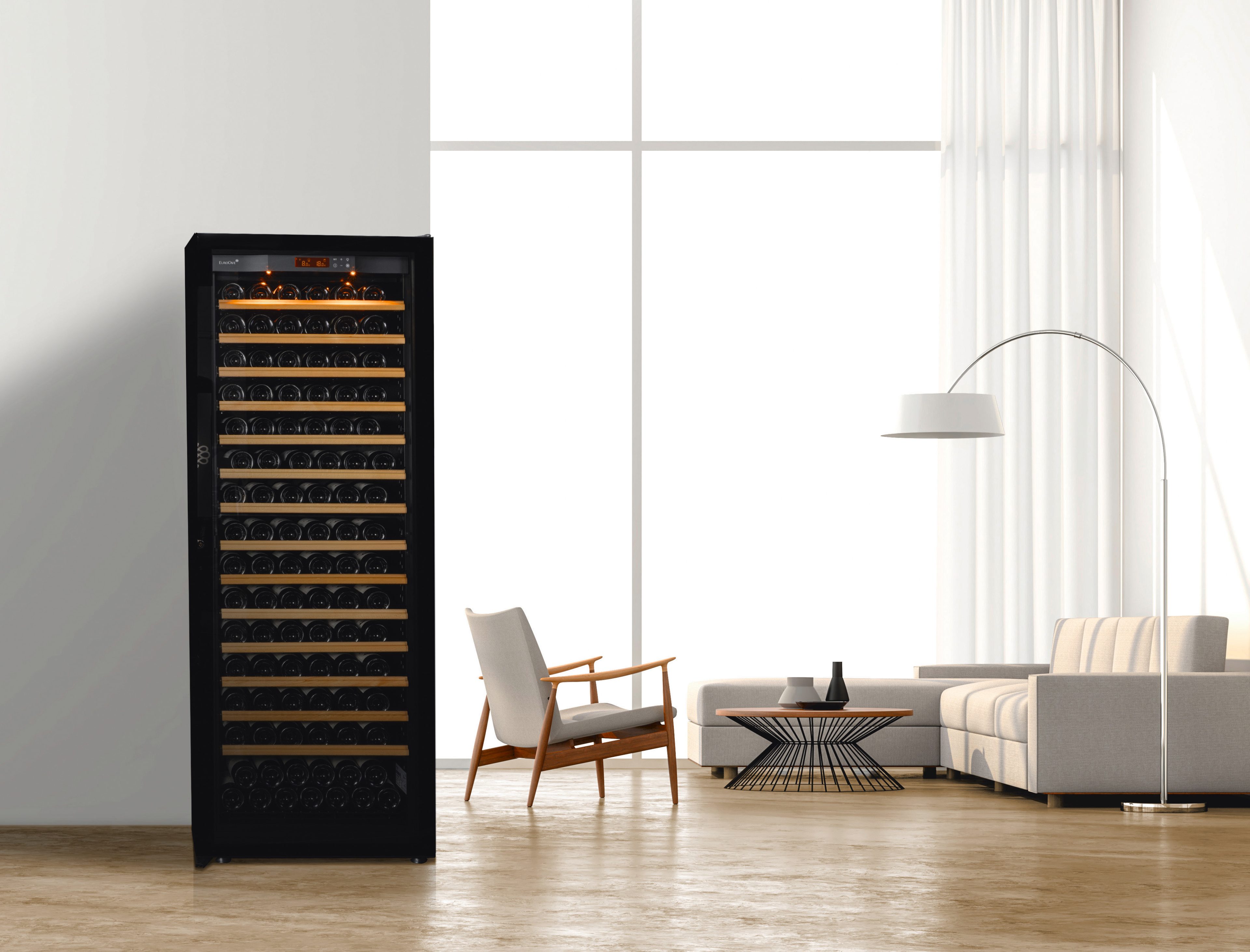
Climate-controlled wine cabinets allow you to create a controlled environment, regardless of the building’s architecture. Temperature, humidity, and air quality can be precisely regulated to ensure stable conditions for wine storage.
They offer a flexible solution for both personal and professional use, where precision and reliability are essential.
The Custom Wine Cellar
For larger collections or sophisticated architectural designs, a custom-built wine cellar offers the ability to precisely control all influencing factors while integrating them into an aesthetic design.
Technical precision and design come together here in a solution that meets the highest standards, both functionally and aesthetically.
Which solution meets your needs?
Beginners and Small Collections
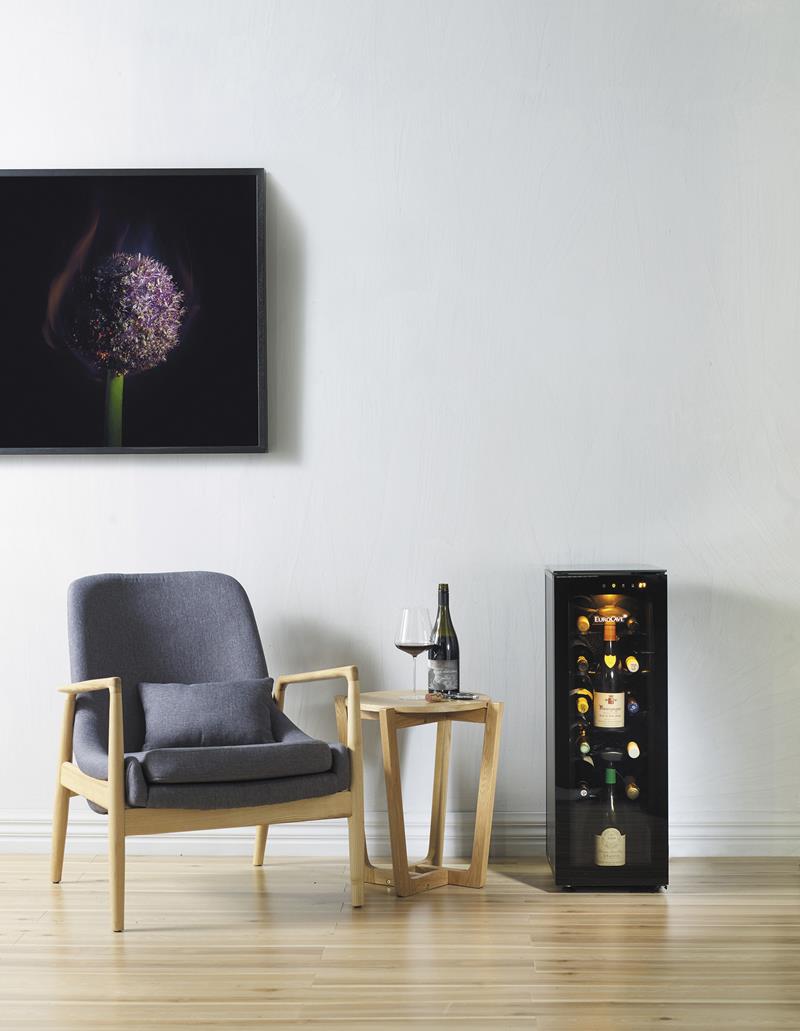
For smaller quantities and regular consumption, a compact climate-controlled wine cabinet is a reliable choice. It maintains stable conditions without taking up much space.
Discerning Collectors
As the collection grows, the demands on organization, capacity, and management increase. Larger systems or those with multiple zones allow for more specialized preservation and better preparation for public access.
Fine Dining and Professional Use
In the culinary arts, availability, precision, and presentation are of central importance. Solutions must enable food preservation, quick access, and perfect serving temperatures.
Why Maintenance and Consistency Are Crucial
Technique alone is not enough
Even the best solution can only reach its full potential if it is regularly monitored and maintained. Filters, seals, and technical components directly affect the stability of storage conditions.
The Role of Filters and Monitoring
Activated carbon filters help maintain air quality and should be replaced at regular intervals. Similarly, it is a good idea to periodically check the temperature and humidity to quickly detect any deviations.
Long-Lasting Protection for Your Wines
Consistency isn't achieved once and for all, but over time. Regular maintenance ensures that the selected conditions remain stable and that your wines remain optimally protected over the years.
Frequently Asked Questions About Wine Storage
What is the ideal temperature for storing wine?
A constant temperature between about 10 and 14 degrees Celsius is considered ideal. More important than the exact temperature is consistency over time.
How important is humidity, really?
It is crucial to the proper functioning of the cork. Air that is too dry can cause leaks, while humidity that is too high can affect the storage environment.
Can I store wine in the refrigerator?
A household refrigerator is designed for short-term cooling, not for long-term storage. Neither the temperature nor the humidity inside is suitable for wine.
How long can wine be stored?
It depends heavily on the specific wine. Some are meant to be enjoyed young, while others can age for many years.
Can light really harm wine?
Yes. UV rays, in particular, can trigger chemical reactions that alter the aromas and degrade the quality of the wine.
Is a climate-controlled wine cabinet necessary?
It becomes essential when natural storage conditions cannot be consistently maintained and a controlled environment is required.
How can you tell if a wine has been stored improperly?
Possible signs include a flatter aroma, a lack of freshness, an unbalanced structure, or a sense that the wine has aged prematurely.
How often should a climate-controlled wine cabinet be maintained?
Regular inspections and replacing the filters at the recommended intervals help ensure stable conditions and long-term reliability.
Conclusion: Wine storage is a matter of precision
The quality of a wine does not end with bottling. It continues throughout its storage. Temperature, humidity, light, quiet, and air quality together form the foundation for controlled aging.
Understanding these factors and managing them with precision creates the conditions in which wine can fully realize its potential. Storing wine thus becomes a conscious choice in favor of precision, consistency, and lasting enjoyment.